Tower War - Tactical Conquest
- 4.2
- Rating
- 100.00M
- Installs
- Free
- Price
 Analysis by App-foxy
My first impression of Tower War - Tactical Conquest was that it looks easy to understand, but it does not stay completely mindless for long. The basic idea is to direct forces between towers and take control of the battlefield, yet winning depends on choosing the right moment, reading the opponent’s movement, and avoiding wasteful attacks. It is a free arcade game from SayGames Ltd, and its quick, touch-focused format makes it a natural choice when I want a short session rather than a long strategy campaign.
I would describe it as a light tactical game for people who enjoy making small decisions under pressure. It is not trying to replace a large real-time strategy game with resource trees, lengthy construction queues, or a huge amount of research. Instead, it reduces the battlefield to a series of readable choices: where to send units, which tower deserves attention, and whether an apparently open route is actually safe. That simplicity is the reason it is approachable, but it is also the main reason experienced strategy players may eventually want something deeper.
What to expect when you start playing
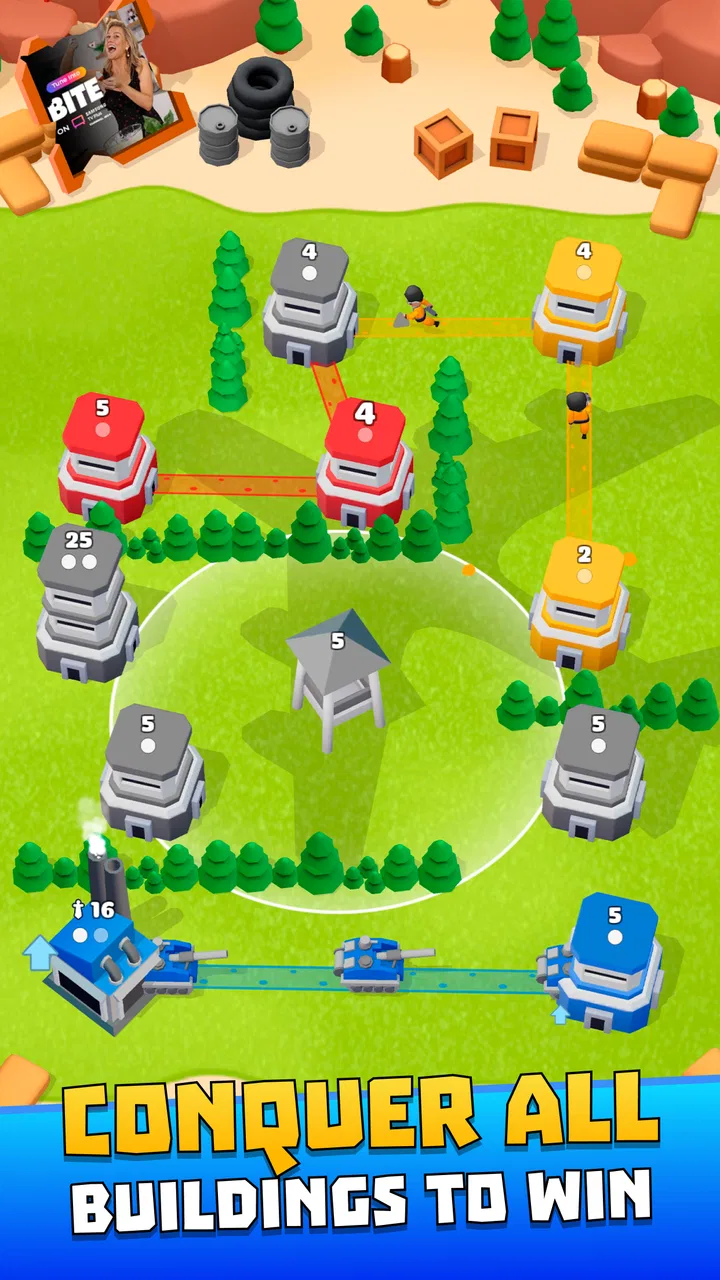
The game’s central appeal is the feeling of turning a crowded battlefield into a manageable puzzle. Towers act as the important points of control, and the battle is usually decided by how efficiently I connect those points. A move that looks aggressive can leave another position exposed, while a slower capture can create a much stronger route for the next attack. The best moments come when I stop reacting to the nearest target and begin planning two moves ahead.
You May Also Like

 Pandora - Music & Podcasts
Pandora’s Music Is Easy to Start, but Harder to Recover
Pandora’s strength is its low-effort path from a seed to a station. Its weak spot is how much confidence it asks you to place in connection, setup, and quiet recovery.

 8 Ball Pool
 Is Built on Rivalries, Rematches, and Routine
A close look at the rivalries, rematches, shared routines, and unanswered safety questions that turn a quick pool match into a persistent mobile community.

 Samsung Music
’s Quiet Strength Is Playing What You Already Own
Its reach comes less from spectacle than from dependable access to a personal library. That simplicity is both the app’s strongest retention engine and its ceiling.

 AccuWeather: Weather Radar
AccuWeather Review: A Quick, Clear Forecast for Everyday Decisions
For everyday plans, the best forecast is the one you can understand quickly. AccuWeather makes rain timing, radar, and local conditions easy to act on, with a few trade-offs.

 Hill Climb Racing
Why Hill Climb Racing Still Turns Crashes Into One More Run
A tiny car, a bumpy hill and one more upgrade: Hill Climb Racing keeps resurfacing because its simple chaos makes every near-miss feel personal.

 AliExpress - Shopping App
AliExpress Makes Global Shopping Feel Personal, but Shoppers Bear the Risk
AliExpress turns a global marketplace into a pocket-sized discovery engine. Its reach is useful, its shopping loop compelling, and its trade-offs easy to miss.
More From Our News Desk
View All News


That makes the first few battles useful rather than intimidating. I do not need to understand a complicated rulebook before trying anything. The screen communicates the main action directly, and the touch controls are designed around selecting a tower and directing an attack. For a first-time player, this is reassuring: I can experiment quickly, see the result, and adjust without spending a long time preparing a match.
At the same time, I would not call every stage effortless. The game gradually encourages more careful timing, especially when several towers are active at once. A common beginner habit is to send everything toward the most obvious target. That can work in the opening moments, but it often creates a weak position elsewhere. I learned to treat every attack as a trade: I gain territory, but I may also reduce my ability to defend the towers I already control.
The presentation suits the arcade category. Battles are compact, the objective is easy to recognize, and the visual style keeps attention on the movement of units and the state of each tower. I never felt that I needed to memorize a large number of icons before understanding what was happening. That clarity matters on a phone, where a game has to communicate quickly without making the screen feel overloaded.
There is also a useful distinction between a game that is simple and one that is shallow. Tower War begins with simple actions, but the value comes from combining them sensibly. Capturing a tower is not automatically the best move if it leaves a more important route open. In practice, I found myself asking whether I was attacking because the move was genuinely strong or simply because it was available. That small pause is where the tactical side starts to emerge.
The game is free to download, with optional in-app purchases ranging from $0.99 to $99.99 per item. I would approach those purchases carefully and decide first whether the core loop suits me. The free entry makes it easy to test, but anyone who dislikes mobile games with optional spending should keep that model in mind before committing time to it.
Who will enjoy this format
I think it works especially well for players who like short arcade sessions that still ask for attention. It is a good fit when I have a few spare minutes and want something more engaging than an automatic idle game. It also suits people who enjoy tactical puzzles but do not want the formal complexity of a traditional strategy title.
It is less suitable for someone looking for a deep campaign with extensive customization, a rich story, or a competitive experience built around long matches. The game’s strength is its focused battlefield decision-making. If I want diplomacy, detailed army composition, or a large persistent world, I would choose a different type of strategy game instead.
Setting it up without overthinking the first launch
The game runs on Android devices using version 8.0 or later. On a compatible phone, the sensible approach is simply to install it and begin with the tutorial or opening stages rather than trying to predict the best strategy in advance. The controls are more easily understood through one or two battles than through abstract explanations, because the important question is not only what a button does, but when using it creates an advantage.
It is worth starting with sound and notifications arranged the way I prefer before playing seriously. That is not a gameplay requirement, but it makes short sessions more comfortable. I also recommend holding the phone in the position that gives the clearest view of the whole battlefield. Since the game depends on tracking several towers and moving forces, a rushed grip or obstructed screen can make a simple decision feel more confusing than it really is.
The content rating is Everyone 10+, which matches the game’s accessible presentation while acknowledging that the tactical conflict is not aimed at very young children. I would still judge it by the child’s ability to understand quick decisions and optional purchases rather than relying only on the age label. For adults and older children who enjoy arcade strategy, the presentation is easy to approach.
SayGames Ltd is the developer, and the game has reached over 100 million installs with an average rating of 4.3 from around 652 thousand ratings. Those figures suggest that the quick tower-control concept has connected with a very broad mobile audience. They do not guarantee that every player will enjoy the pacing, but they make it clear that this is not an obscure experiment with a tiny audience.
The first meaningful success
My advice for the first successful battle is to resist sending units everywhere at once. Begin by identifying the tower that gives the safest improvement to your position. A nearby capture may be better than a more ambitious attack if it creates a stable base for the next move. Once that position is secure, look again at the battlefield instead of continuing with the original plan automatically.
The most useful beginner habit is to watch the route between towers before committing. I try to notice which positions can support one another and which ones are isolated. If I capture a tower that cannot be protected, I may gain a point on the map but lose control of the overall flow. This is one of the game’s less obvious lessons: territory has value only when I can use it and defend it.
Another practical tip is to separate urgent moves from attractive moves. An enemy advance toward a vulnerable tower deserves attention even if another target looks more rewarding. I used to chase the most visible opportunity, then wonder why the battle suddenly became difficult. Prioritizing the threat that can change the map fastest produces more reliable results than constantly attacking the closest opponent.
When a battle goes well, I try to remember the sequence that created the advantage rather than only celebrating the final capture. Did I wait until the opponent committed elsewhere? Did I take a central position before attacking the edge? Did I preserve enough strength to respond? Repeating the reasoning is more valuable than repeating the exact path, because later layouts may require a different order.
For a short everyday scenario, imagine opening the game during a commute or while waiting for an appointment. I would play one stage with the goal of practicing restraint: make the safest useful capture, observe the opponent, and only then expand. That gives the session a clear purpose, even if I do not finish a long run. It also prevents the familiar mobile-game problem of tapping quickly without learning anything from the result.
Where new players commonly get confused
The first source of confusion is assuming that the largest visible group is always the strongest option. Numbers on the screen can be persuasive, but positioning and timing matter just as much. A large attack sent through a poor route may arrive too late or leave the original tower unable to respond. I found that checking the whole map before tapping was often more important than reacting to the most dramatic movement.
Players may also mistake speed for progress. Capturing several towers quickly feels satisfying, but uncontrolled expansion can stretch the battlefield and create multiple problems at once. A better approach is to pause after each meaningful capture and ask whether the new position improves the next decision. If it does not, I may be expanding for appearance rather than advantage.
Another point that takes time to appreciate is that defense is not necessarily passive. Holding a tower can force the opponent to take a less favorable route, protect a future attack, or buy time while another position develops. I initially treated defensive play as waiting, but the stronger interpretation is preparation. A quiet move can be the reason an aggressive move succeeds later.
Touch controls can create their own friction. On a smaller screen, a quick selection may not feel as deliberate as intended, particularly when several towers are close together. I recommend slowing down during crowded moments and confirming the selected position visually before committing. That small adjustment reduces mistakes that might otherwise look like bad strategy.
The game can also feel repetitive if I approach every stage with the same opening. Its compact format encourages experimentation, so I get more from it when I vary the order of captures and test whether patience or pressure works better. However, this is also a limitation: players who need a large variety of systems, missions, or long-term strategic layers may find the loop too narrow after the initial novelty fades.
The current version is 1.26.2, and the game was released on June 24, 2021. Those details are useful when checking compatibility or identifying the correct app before downloading, especially because mobile stores can contain similarly named games. I would make sure the developer name matches SayGames Ltd and that the listing describes Tower War rather than assuming every tower-themed result is the same game.
How to improve after the first few victories
Once the basic controls feel natural, I would stop measuring progress only by whether I win. Instead, I would review the first major mistake in each failed battle. Did I attack before enough support was available? Did I ignore a route because the target looked unimportant? Did I spend too long defending a position that no longer mattered? These questions turn quick losses into useful practice.
A strong next step is to plan around transitions. The moment after capturing a tower is often more important than the capture itself, because the battlefield changes and the opponent may respond immediately. I try to decide in advance whether the new tower is meant to attack, defend, or connect two parts of my position. Giving it a role prevents aimless tapping and makes the next move clearer.
I also recommend treating the edges of the map differently from central positions. An edge can be easier to protect because fewer directions lead into it, but it may also offer fewer options for expansion. A central tower can open several routes while exposing me to more pressure. The right choice depends on the situation, so I avoid assuming that one type of position is always superior.
Compared with a conventional real-time strategy game, this title is much easier to enter and far quicker to play. I do not need to manage a broad economy or remember a long build order. Compared with an ordinary arcade game, though, it demands more planning and punishes careless repetition. That middle ground is its clearest identity: it offers tactical decisions without asking for the commitment of a full strategy campaign.
Compared with an idle or auto-battle alternative, it gives me more control over the outcome. I cannot simply wait for numbers to rise and expect the same result every time. My choices about timing and routes matter. The trade-off is that it requires attention; if I want something to run in the background while I do other tasks, this is not the better option.
Some players will naturally wonder whether it is suitable for casual, non-competitive play. In my experience, yes, provided they enjoy repeating short challenges and improving through observation. It does not require me to become a dedicated strategy expert to have fun, but the satisfaction increases when I actively learn from the battlefield. Players who dislike retrying a stage after a poor decision may find the pressure less appealing.
Others may ask whether it is worth installing on an older compatible phone. Since the minimum operating system is Android 8.0, compatibility is straightforward to check. The more important question is screen comfort: the game’s decisions are simple, but crowded tower layouts still benefit from a display where targets are easy to distinguish. If taps feel cramped, the experience can become frustrating even when the phone technically runs the game.
For iPhone and iPad users, I would judge it by the same practical criteria: do I want a touch-controlled arcade strategy game that can be played in short bursts, and am I comfortable with optional purchases? The appeal is not tied to a long setup or a complicated control scheme. It is the immediacy of seeing a tactical situation and making a choice with a few taps.
My recommendation after spending time with it
The best way to enjoy Tower War is to play slowly enough to think, even though the battles are designed to feel quick. That sounds contradictory, but it captures the game accurately. The controls invite immediate action, while the better results come from observing the whole map, preserving useful positions, and choosing a target for a reason.
I recommend it to anyone who wants a free arcade game with a tactical edge, particularly players who enjoy short sessions and learning through trial and error. The broad audience, strong average rating of 4.3, and more than 16 thousand written reviews show that many people have found the format appealing. I would still keep expectations realistic: this is not a replacement for a detailed strategy simulator, and the optional purchase model may not suit everyone.
My final advice is to give the opening stages a fair test without rushing to spend money. Focus first on one meaningful improvement: stop attacking the nearest tower automatically and begin choosing positions that support the next move. If that small change makes the battles more satisfying, the game probably has enough tactical texture for you. If you still want deeper systems after that, a full-scale strategy title will likely be a better long-term choice.
For me, the lasting value is found in those compact moments when a losing position can be rescued by one well-timed decision. The game keeps its rules approachable, but it rewards attention rather than random tapping. That balance makes it easy to recommend as a casual download, with the clear qualification that its focused loop is a strength for some players and a limitation for others.
FAQs for Tower War - Tactical Conquest
01What is the main objective of Tower War - Tactical Conquest?
Tower War - Tactical Conquest is a strategy game where your goal is to conquer enemy towers while defending your own. Players must deploy troops strategically to capture towers, gain resources, and ultimately dominate the battlefield. The game combines elements of resource management, tactical deployment, and strategic planning to challenge players.
02Is Tower War - Tactical Conquest free to play?
Yes, Tower War - Tactical Conquest is free to download and play. However, it contains in-app purchases that can enhance the gaming experience. Players can buy additional resources, power-ups, or premium features. It's important to be aware of these options to manage spending, especially if the game is played by children.
03What platforms is Tower War - Tactical Conquest available on?
Tower War - Tactical Conquest is available on both Android and iOS platforms. Players can download it from the Google Play Store for Android devices and the Apple App Store for iOS devices. The game is optimized for mobile play, ensuring a smooth experience across different devices.
04Does Tower War - Tactical Conquest require an internet connection?
While Tower War - Tactical Conquest can be played offline for most single-player modes, an internet connection is required for multiplayer battles and to update the game. Staying connected also allows players to participate in events and access new content as it becomes available.
05How does the ranking system work in Tower War - Tactical Conquest?
The ranking system in Tower War - Tactical Conquest is based on player performance in battles. Winning battles increases your ranking, while losing can cause it to drop. Rankings determine matchmaking and unlock new challenges. Consistent play and strategic victories are key to climbing the ranks.
Pros
- Engaging strategic gameplay with various tactics.
- Visually appealing graphics and smooth animations.
- Regular updates with new levels and challenges.
- Multiplayer mode enhances competitive play.
- Easy-to-learn controls for all skill levels.
Cons
- In-app purchases can be quite expensive.
- Some levels can feel repetitive over time.
- Occasional connectivity issues in multiplayer.
- Ads can be intrusive and disrupt gameplay.
- Limited offline play options available.

Tower War - Tactical Conquest
Gallery